This post was published on Jun 24, 2026 | Updated on Jun 24, 2026
When financing a car in South Africa, a balloon payment is one of the key terms that can affect both your monthly instalments and your financial position at the end of your agreement.
While balloon payments are primarily part of vehicle finance, they are also closely linked to car insurance, particularly when it comes to vehicle value and potential shortfalls after a claim following a vehicle write off or theft.
This article explains what balloon payments are, how they work, and how they connect to car insurance. Balloon payments also form part of broader vehicle buying considerations for more on what to look at when purchasing a car, see: Important factors to consider when buying a car
What is a Balloon Payment?
A balloon payment is a lump sum that remains payable at the end of a vehicle finance agreement.
Instead of repaying the full value of the car through monthly instalments, a portion of the total amount is deferred to the end of the term.
This means:
- Monthly instalments are calculated on a reduced balance
- A final lump sum (the balloon) becomes payable at the end and if the lump sum cannot be paid at the end of the finance period, there is an option to refinance.
<figure class="image">
 </figure>
How Balloon Payments Work
In a typical structure:
- A vehicle is financed
- A percentage of the vehicle’s value is set aside as a balloon amount
- Monthly instalments are calculated excluding this portion
- The balloon amount remains payable at the end
Example:
Vehicle price: R300,000
Balloon (30%): R90,000
Financed monthly portion: R210,000*
*Disclaimer that this calculation speaks to the financed portion and is exclusive of any interest applicable in terms of the financing agreement
Monthly instalments are based on the lower amount, while R90,000 remains outstanding at the end.
Balloon Payment Trends in South Africa
Balloon payments are widely used in South Africa as part of vehicle finance agreements. Recent industry data shows that approximately 35% of new car finance deals include a balloon payment — meaning roughly 1 in 3 financed vehicles make use of this structure. The size of these balloon payments typically ranges between 30% and 40% of the vehicle’s value, depending on the finance agreement.
This reflects a broader trend where vehicle finance structures are adjusted to manage monthly instalments, while a portion of the cost is deferred to the end of the term.
Why Balloon Payments Lower Monthly Instalments
Because part of the loan is deferred:
- The financed amount is smaller
- Monthly instalments are reduced
This structure changes how repayment is distributed over time rather than reducing the total cost.
Balloon Payments and Vehicle Value
Vehicle value plays an important role in balloon finance agreements, particularly over time. As a vehicle ages, it typically depreciates, meaning its market value may decrease while the outstanding finance balance, including any balloon amount, remains. This becomes more relevant where a balloon payment is still outstanding and the vehicle’s market value is lower than the remaining finance balance. In these cases, the difference between the vehicle’s value and the outstanding amount may affect financial outcomes at the end of the term or in the event of a claim. To understand how vehicle values are calculated in insurance, see: retail verses market value blog.
Balloon Payments and Car Insurance
Although balloon payments are part of vehicle finance, they are closely connected to how vehicles are insured and valued.
1. Insured Value vs Outstanding Finance
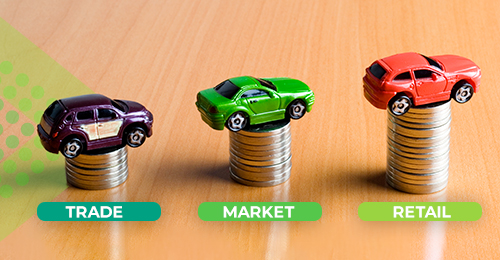
Car insurance pay-outs are based on the insured value of the vehicle, which may be:
- Retail value
- Market value
- Trade value
Specified value
These values may differ from:
- The outstanding finance balance
- The balloon payment amount
This difference becomes important in certain situations, see below scenarios.
Total Loss Scenarios
If a vehicle is:
- Written off
- Stolen
In the event of a total loss, such as when a vehicle is written off or stolen, the insurer will assess the claim based on the insured value of the vehicle, in line with the policy terms and conditions. This insured value may differ from the remaining finance balance, including any outstanding balloon payment. If the pay-out amount is lower than the total amount still owed on the vehicle, a difference may remain between the insurance pay-out and the outstanding finance balance. This difference is referred to as a shortfall and is explained further below.
2. The Concept of Shortfall A shortfall refers to the difference between:
- The insurance pay-out
- The remaining finance amount
For example:
Insurance pay-out: R220,000
Outstanding finance (including balloon): R260,000
Difference: R40,000
In some cases, insurers may offer shortfall or top-up cover designed to address this difference between an insurance pay-out and the outstanding finance balance. At iWYZE, shortfall cover is available as an additional option, subject to policy terms and conditions.
3. Role of Vehicle Valuation
Insurance pay-outs are not based on the original purchase price or finance structure, but rather on the insured value at the time of the claim.
Balloon Payments and Depreciation
Vehicle depreciation is one of the key reasons a gap can develop between a vehicle’s value and the outstanding finance amount in balloon payment structures.
Over time: Vehicles lose value due to age, mileage and market demand The outstanding balloon amount remains fixed.
This can result in:
A gap between the vehicle’s value and the outstanding balance
This gap may affect:
- Trade-in values
- Settlement amounts
- Insurance-related financial outcomes
- End-of-Term Scenarios
At the end of a finance agreement, the balloon payment becomes due.
Common outcomes include:
- Payment of the outstanding balloon amount
- Refinancing the balance
- Selling or trading in the vehicle
These outcomes may be influenced by:
- The vehicle’s current market value
- The outstanding finance amount
- Balloon Payment vs No Balloon
The structure of repayments differs depending on whether a balloon payment is included:
<figure class="table">| Feature | With Balloon Payment | Without Balloon Payment |
| Monthly Instalment | Lower | Higher |
| Final Payment | Includes Balloon Payment | Excludes Balloon Payment |
| Outstanding Balance | Higher at the end | Fully settled |
With a balloon payment, a portion of the vehicle’s value is deferred and becomes payable as a lump sum at the end of the finance term.
This comparison highlights how repayment structures differ.
How Balloon Payments Fit Into the Insurance Landscape
Balloon payments do not form part of an insurance policy, but they intersect with insurance through:
- Vehicle valuation methods
- Pay-out calculations
- Outstanding finance balances
Insurance is based on the value of the vehicle, while finance is based on the structure of the loan.
It is also important to note that vehicle finance and insurance are separate products. Finance agreements, including those with balloon payment structures, are subject to their own terms, and insurance cover may be included as an additional cost depending on the provider.
Interest on a vehicle finance agreement is typically calculated based on the financed amount, while a balloon payment represents a portion of the value deferred to the end of the term. These structures form part of the finance agreement and are not determined by the insurance policy.
In some cases, where there is a difference between an insurance payout and the remaining finance amount, including any balloon payment, this may result in a shortfall. Credit shortfall or top-up cover is designed to address this type of difference, subject to policy terms and conditions.
These elements are calculated independently but may intersect in certain scenarios, such as in the event of a claim.
Car Insurance Options with iWYZE
At iWYZE, car insurance options may include cover based on:
- Retail value
- Market value
- Trade value
Specified value
These valuation methods determine how a vehicle is assessed in the event of a claim, subject to policy terms and conditions.
To explore available options or obtain a quote, visit: https://www.iwyze.co.za/quote
Balloon payments are a common feature of vehicle finance in South Africa and affect how repayments are structured over time.
While separate from insurance, they are closely linked to:
- Vehicle value
- Depreciation
- Insurance pay-out calculations
Understanding how these elements interact provides a clearer view of how finance and insurance relate within the broader vehicle ownership journey.