


This post was published on Sep 2, 2026 | Updated on Sep 7, 2026
In South Africa, the impact of rising fuel prices is immediate and widespread. For most of us, driving is a necessity: it’s how we commute, transport our children, support local businesses, and stay connected with our families. Consequently, the cost of fuel has evolved beyond a simple motoring expense, and is now a critical factor in managing our household budgets.
Recent data shows that consumer inflation climbed to 4.5% in May, a trend largely propelled by the fuel sector. During this period, the fuel index saw a 14.3% monthly surge, resulting in petrol and diesel prices being 24.8% and 53.8% higher, respectively, compared to the previous year.
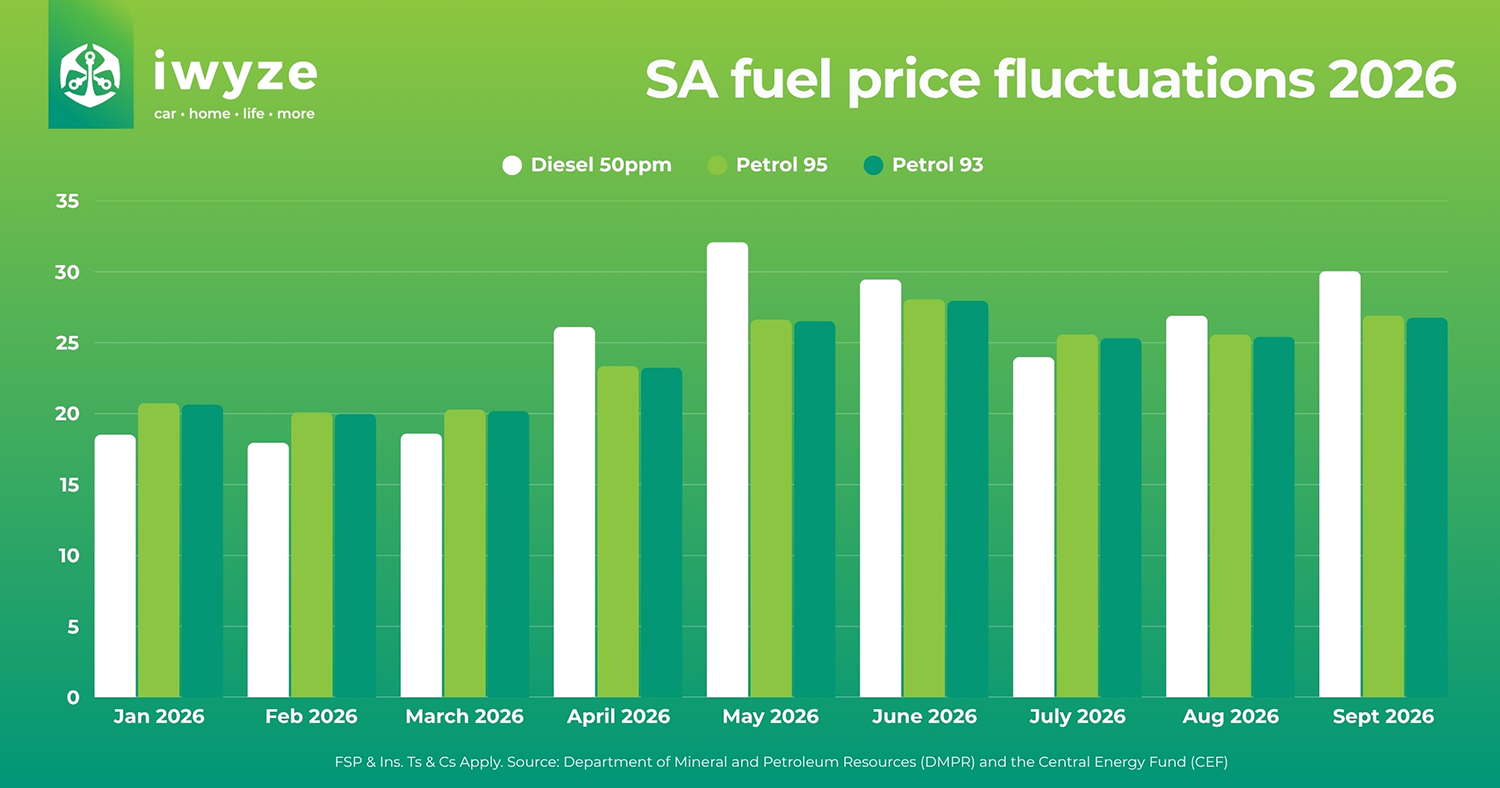
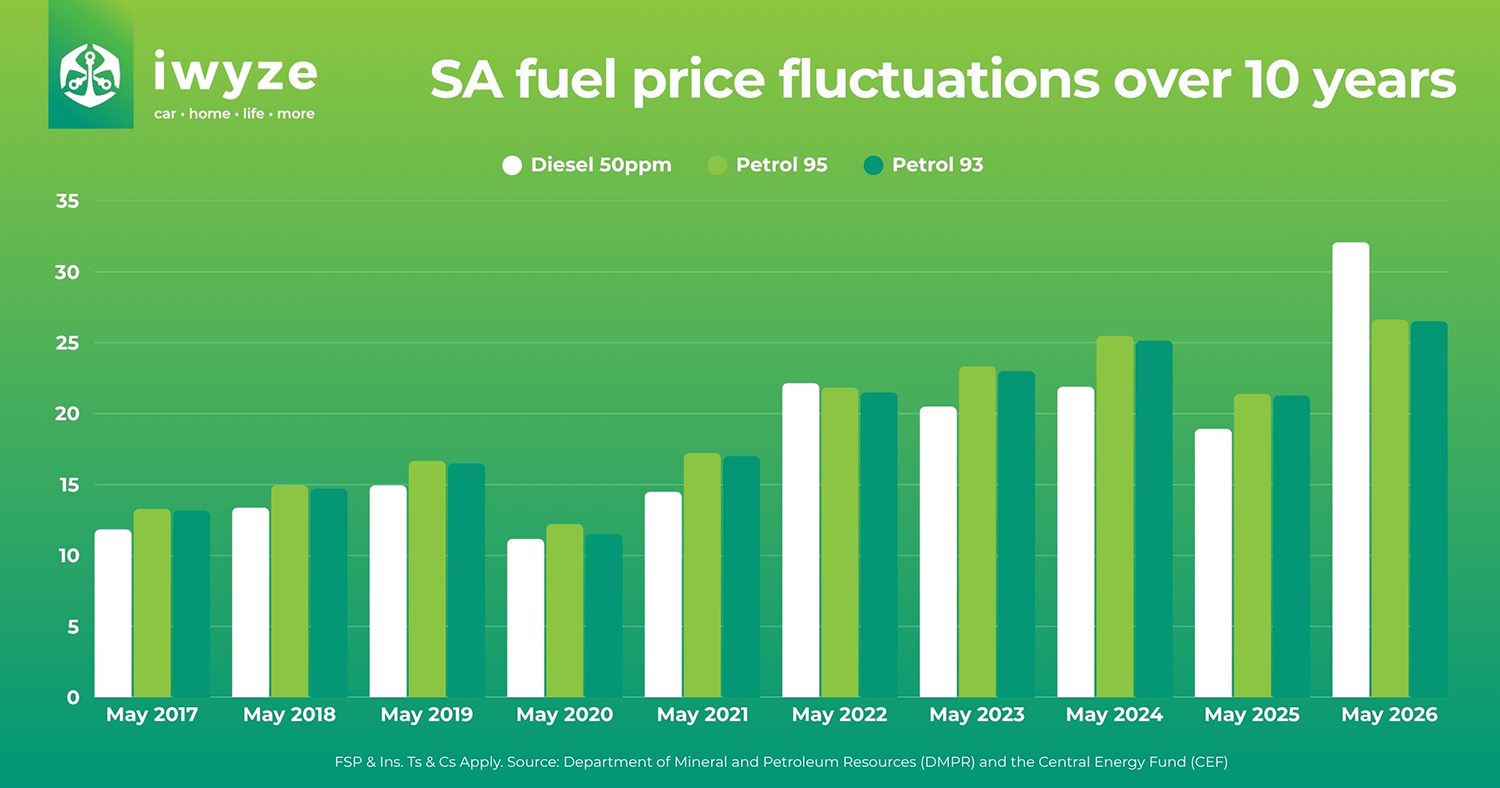
According to the Department of Mineral and Petroleum Resources, a price hike of 143 cents per litre was implemented for both grades of petrol on Jun 3, 2026.
You can’t control the petrol price. But you can control many of the habits, choices and maintenance routines that affect how much fuel your car uses. In this guide, we help you reduce the cost of driving without creating bigger safety or repair risks.
Modify Your Driving Habits for Better Fuel Efficiency
The most immediate way to lower fuel consumption begins with the person behind the wheel, and that’s you! By adopting a smoother driving style, reducing your average speed, accelerating gradually and keeping enough following distance to avoid constant harsh braking and re-acceleration, you can help your car use fuel more efficiently. Taking this controlled approach not only saves fuel but also provides more time to navigate common South African road challenges like potholes, pedestrians, taxis, and heavy traffic.
To optimise your fuel economy while driving, follow these practical steps:
- Avoid sharp pull-aways by accelerating with a gentle touch
- Initiate braking earlier and apply pressure gradually whenever it’s safe to do so
- Maintain a constant, legal speed instead of frequently fluctuating between speeding up and slowing down
- Keep sufficient space between you and the vehicle ahead to allow for smooth responses without the need for hard braking
- Shift gears in alignment with your speed to prevent the engine from labouring unnecessarily
Check Tyre Pressure Before It Costs You More
Maintaining correct tyre pressure is essential for both vehicle safety and fuel efficiency. Properly inflated tyres, and frequently verifying both pressure and tread depth against the vehicle manufacturer's specifications are key.
For the most accurate reading, check your pressure when tyres are cold or after your car has been stationary for an extended period (so in the morning, after it’s stood overnight). You can typically find the recommended levels on a sticker inside the driver-side door frame, in your glove compartment, or within your owner's manual. Don’t rely on the maximum pressure figure embossed on the tyre sidewall for daily driving.
Essential Tyre Maintenance Steps:
- Adjust inflation based on the specific load and vehicle requirements
- Regularly inspect for signs of damage, such as bulges, cracks, slow punctures, or uneven wear
- Include the spare tyre in your routine checks
- Schedule an immediate inspection of your rims, tyres, and wheel alignment if you strike a pothole
- Exercise caution in wet conditions by reducing speed and increasing following distances to compensate for reduced grip
Don’t Ignore Maintenance That’s Already Due
Skipping maintenance can feel like a saving in the short term. But when small issues build up, they can make your vehicle less reliable and more expensive to repair. Resolving minor (and major car!) service issues, and using the recommended grade of motor oil for your car, are serious fuel-saving steps.
A regular service can help ensure that oil, filters, brakes, tyres, suspension, lights and warning signs are checked before they’re able to accumulate or get worse. If your budget is tight, ask your service provider what is urgent, what can be planned for, and most importantly: what shouldn’t be delayed.
Reduce Your Car’s Load
Reducing unnecessary weight, and avoiding extra drag where possible, can help your car use fuel more efficiently. Think of it this way: a heavier car needs more energy to move, especially in city driving and stop-start traffic. You don’t need to empty your entire car every day, but it is worth clearing out anything that’s become a permanent passenger for no good reason!
- Remove sports gear, boxes, bags or tools you do not need for that day
- Remove unused roof racks or roof boxes, as they can create extra drag even when they’re empty
- Keep essential emergency items, but avoid carrying unnecessary bulk
- If you carry work equipment, unpack what you can between trips
Use Air Conditioning, Windows and Idling WYZEly
Combining moderate air conditioning use with less idling can make a difference to how much fuel your vehicle uses — and wastes — over time. That doesn’t mean you should drive uncomfortably or with poor visibility. Rather, in hot weather, air conditioning can help you stay alert. In wet or cold weather, demisting can be essential for safe visibility. Use what you need, but avoid running systems out of habit. Being intentional around usage can save your fuel in the long run! Fun fact? At higher speeds, using the aircon moderately may be more fuel-efficient than driving with the windows open, because open windows can create drag and make the car work harder.
- Don’t run the air conditioner at full blast for longer than necessary
- Use demisting when windows fog up, especially in winter or wet weather
- Park in shade where possible so the car isn’t as hot when you return
- Switch off the engine when you are parked and waiting, but only where it’s safe and practical to do so
Plan Trips Before You Leave
Plan your journeys to save fuel in one to five!
Five WYZE Tips:
- Consolidate multiple errands into a single efficient route
- Whenever your schedule permits, try to travel outside of known traffic peaks
- Share trips with colleagues, friends, or family members
- Utilise public transport systems if they’re a safe and practical option for your commute
- Review current road conditions and traffic reports before embarking on longer journeys
Take South African Road Conditions Into Account
Fuel-saving advice can sound simple on paper. But Mzansi’s road conditions add a little complexity! Bad roads, flooding and fuel consumption are related: potholes and poor road conditions can contribute to tyre, rim, suspension and alignment damage, and choosing better-maintained routes can reduce wear and may save on petrol.
That means the shortest route isn’t always the cheapest route. If one road is full of potholes, flooding, poor lighting or heavy stop-start traffic, a slightly longer but safer route may reduce the risk of damage, delays and fuel waste.
Four #WYZE Tips:
- Slow down when approaching damaged roads or standing water
- Avoid driving through flooded roads unless you are certain it is safe
- Choose well-lit, better-maintained routes where practical
- Check tyres, rims, suspension and alignment after a hard pothole impact
And then there’s the long term planning you can do to ensure that in addition to the practical habits you form on the road, you’re also covered in case of other needs. This is where car insurance comes in!
The Role of Car Insurance in Your Overall Cost Savings
Adopting fuel-efficient habits is a great way to manage daily expenses. Think of car insurance as a means of safeguarding additional spend that then complements your fuel savings approach. Maintaining appropriate vehicle cover is essential, so it’s worth evaluating your insurance policies to ensure your policies reflect your lifestyle, habits and vehicle use. As for iWYZE, we offer offer a range of products to suit your needs and your budget!
Insurance That’s Tailored to Your Needs:
- Comprehensive Car Insurance: Insures against loss or damage resulting from natural disasters or road accidents, encompassing cover for fire, hijacking, theft, and third-party liability, alongside access to Road Emergency Services, in accordance with your specific policy terms.
- Third Party, Fire and Theft Cover: Focuses on risks such as explosion, lightning, fire, hijacking, theft, and third-party liability, subject to the relevant terms and conditions.
- Tyre & Rim Cover: Compensates for the cost of repairing or replacing tyres and rims due to accidental damage, with cover for up to four incidents within a 12-month period, subject to the cover start date, anniversary date and policy terms.
If you are reviewing your budget because of high fuel prices, speak to your insurer before cancelling cover. There may be ways to review your excess, check your insured value, remove cover you no longer need or understand which type of cover best suits your current risks.
The WYZE Move: Make Your Tank Go Further, and Cover the Car That Keeps You Moving
High fuel prices can make every trip feel more expensive. But small, practical changes can help you manage the cost of driving more carefully. At the same time, the right insurance can cover you against the larger, unexpected costs that fuel-saving habits alone cannot prevent.
Take a fresh look at your driving habits, your vehicle maintenance and your car insurance. Your tank, your tyres and your budget will thank you.
Looking to save on car insurance? Contact iWYZE on 0860 93 94 93 or get a quick online quote at www.iwyze.co.za
Sources:
The Impact of Bad Roads, Flooding, and Weather | iWYZENavigating Wet Weather: The Importance of Tyre Safety | iWYZEUnderstanding Car Insurance Excess | iWYZEStatistics South Africa | Inflation rises, fuel index movement, petrol and diesel annual increasesDepartment of Mineral and Petroleum Resources | Fuel Saving Tips - Energy Indaba 2025 | GovDepartment of Mineral and Petroleum Resources | Fuel Saving Tips - Energy Indaba 2025d Petroleum Resources | Mineral and Petroleum Resources announces adjustment of fuel prices