


This post was published on Jan 15, 2016 | Updated on May 20, 2026
When taking out car insurance in South Africa, one of the key terms that often causes confusion is how a vehicle is valued.
Terms like retail value, market value, and trade value are commonly used in insurance policies yet many drivers are unsure what they mean and how they affect cover.
Understanding these terms is important because the value assigned to a vehicle influences:
- The insurance premium
- The amount paid out in the event of a claim
- The difference between a payout and the cost of replacing a vehicle
This article explains these vehicle values in simple terms.
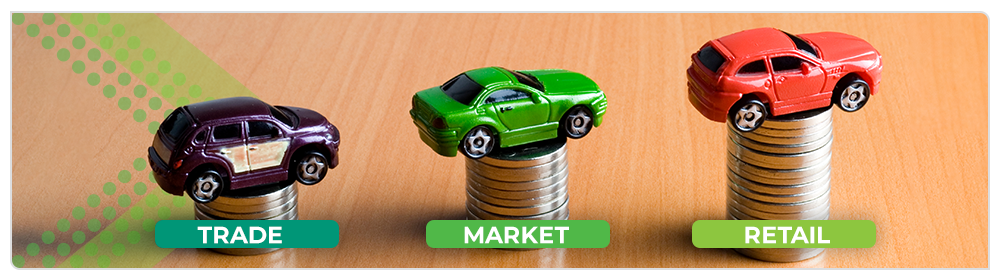
What is Retail Value?
Retail value refers to the price a vehicle would typically sell for at a dealership.
This value is generally the highest of the three because it includes:
- Dealer costs and margins
- Vehicle preparation and reconditioning
- Associated overheads
In an insurance context, retail value is often closest to the amount required to purchase a similar vehicle from a dealer.
What is Market Value?
Market value refers to the estimated price a vehicle would sell for in the open market, typically between private buyers and sellers.
This value is influenced by several factors, including:
- The vehicle’s age
- Mileage
- Condition
- Demand for that make and model
- Market trends
Market value typically falls between retail and trade value and may fluctuate over time as these factors change.
What is Trade Value?
Trade value, also known as book value, refers to the amount a dealer may offer when purchasing a vehicle.
This is generally the lowest of the three values because it reflects:
- The dealer’s need to resell the vehicle
- Associated costs and profit margins
Trade value is often used when a vehicle is traded in or sold directly to a dealership.
Key Differences Between Retail, Market and Trade Value
<figure class="table">
<figure class="table">
<figure class="table">| Value Type | Typical Position | Description |
| Retail Value | Highest | Dealer selling price |
| Market Value | Middle | Estimated private sale value |
| Trade Value | Lowest | Dealer purchase price |
</figure>
</figure>
How vehicle value is applied in car insurance
While retail, market and trade value are commonly used to describe how a vehicle’s worth is estimated, not all of these values are used in insurance policies.
At iWYZE, vehicles are typically insured based on:
- Retail value
- Market value
- Specified value (subject to terms and conditions)
Specified value may be considered where supporting documentation is provided. Each option is subject to the terms and conditions of the policy.
Trade value is generally used as a reference point for vehicle pricing, rather than as an insured value in a policy.
Example of Vehicle Values in South Africa
To illustrate how these values may differ, consider a VW Golf 8 (2026 model - Golf 8.5 1.4 TSI Life Plus (110kW)):
<figure class="table">
<figure class="table">
<figure class="table">| Insured Type | Insured Amount | *Premium |
| Retail value: | R604 500 | R1 339,98 |
| Market value: | R579 500 | R1 284,56 |
| Trade value: | R525 000 | R1 163,75 |
</figure>
</figure>
*Comprehensive Insurance premiums based on profile of a 55 year old male, with a basic excess of R6 500, who lives in Steyn City. *Premiums are risk profile dependent and reviewed annually. Ts & Cs apply. Source: iWYZE Data
Trade value is typically 10%–20% below market value (industry norm), trade values aren’t publicly listed. These figures are indicative and may vary depending on factors such as condition, mileage, and market demand.
How Vehicle Value Affects Insurance
The value assigned to a vehicle plays a role in two main areas:
- Insurance Premium
The selected value influences the level of risk assumed by the insurer, which in turn affects the premium. - Insurance Payout
In the event of a total loss (such as theft or write-off), the payout is based on the insured value, subject to the terms and conditions of the policy.
The difference between retail, market and trade value can result in varying payout amounts.
Understanding Value Differences Over Time
Vehicle values are not fixed and may change over time due to:
- Depreciation
- Market demand
- Economic conditions
- Vehicle condition and usage
As a result, the gap between retail, market and trade value may increase or decrease over the lifespan of a vehicle.
Shortfall and Vehicle Finance
In some cases, the insured value of a vehicle may differ from the outstanding balance on a finance agreement.
This difference is commonly referred to as a shortfall.
For example:
- Insurance payout: R700,000
- Remaining loan balance: R750,000
- Difference: R50,000
Shortfall or top-up cover relates to this difference between the insurer payout and the remaining balance owed on a financed vehicle.
Retail, Market and Trade Value at a Glance
- Retail value represents the highest estimated price and is based on dealership selling prices
- Market value represents an average estimate influenced by real-world buying and selling conditions
- Trade value represents the lowest estimate based on dealer purchase pricing
Each value reflects a different point in the vehicle’s pricing spectrum.
Why These Values Are Important
Understanding how these values work provides clarity on how a vehicle is assessed within an insurance context.
Differences between these values can affect:
- The insured amount
- The payout amount in the event of a claim
- The difference between a payout and the cost of replacing a vehicle
These factors may vary depending on the specific policy and insurer.
Calculating Your Vehicle’s Value
Vehicle values are typically determined using industry guides and valuation tools that consider:
- • Vehicle specifications
- • Age and mileage
- • Condition
- • Current market trends
These tools provide an estimated range for retail, market and trade value.
This allows for flexibility in how a vehicle is insured, depending on the selected option and policy terms.
To explore available options or obtain a quote, visit: https://www.iwyze.co.za/quote